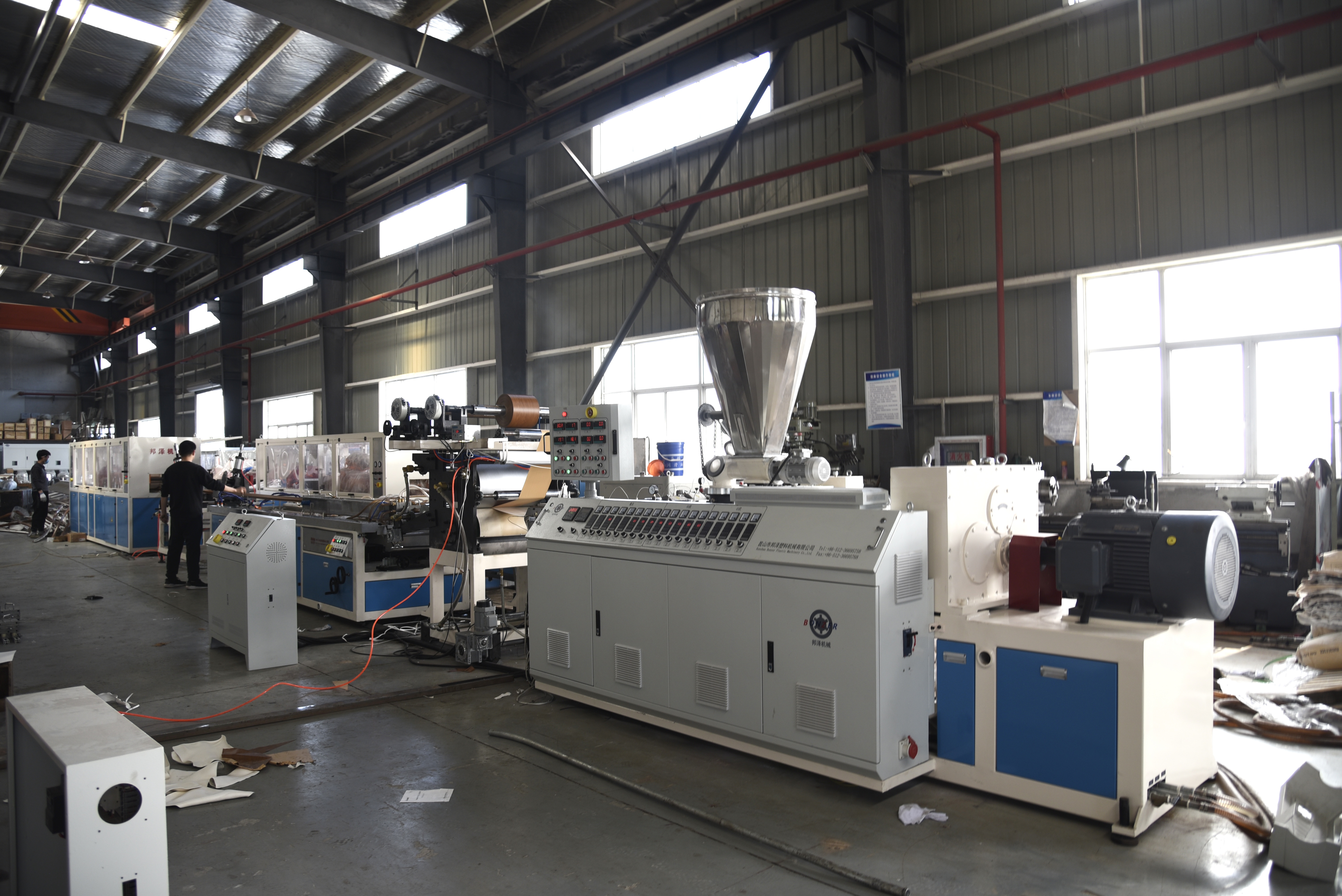
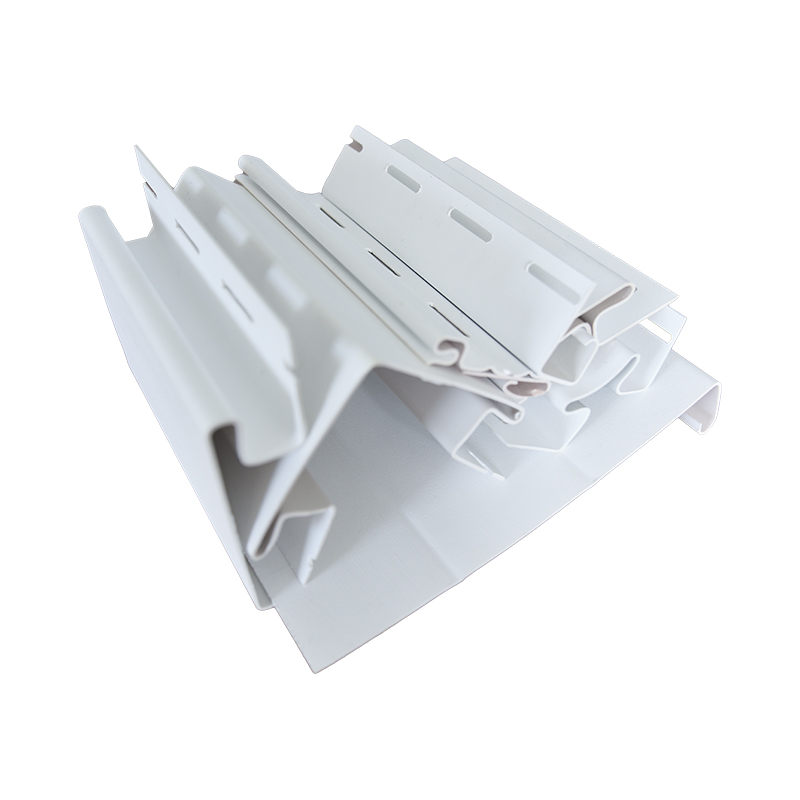
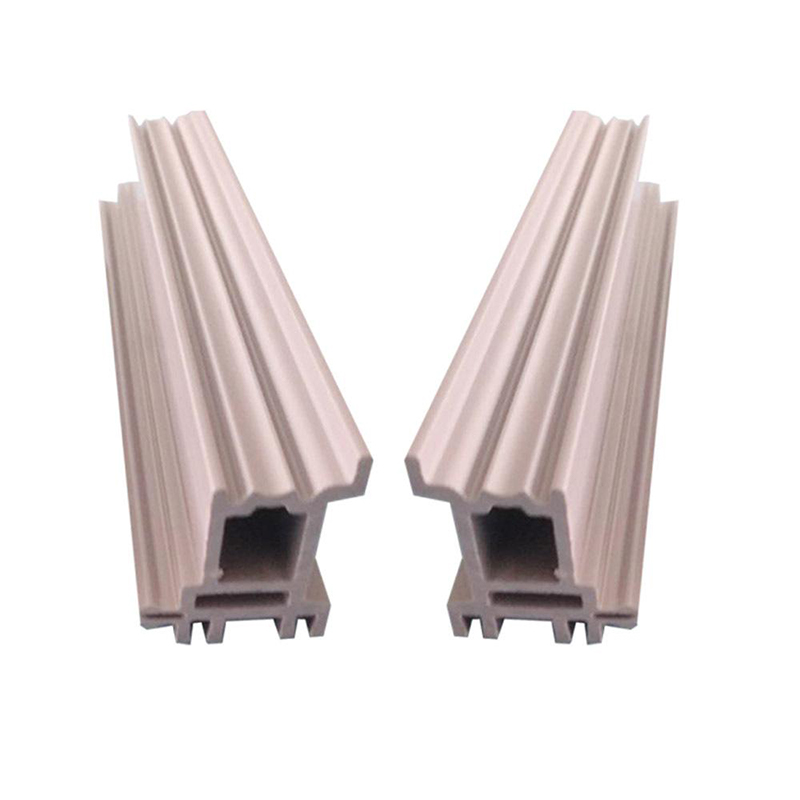
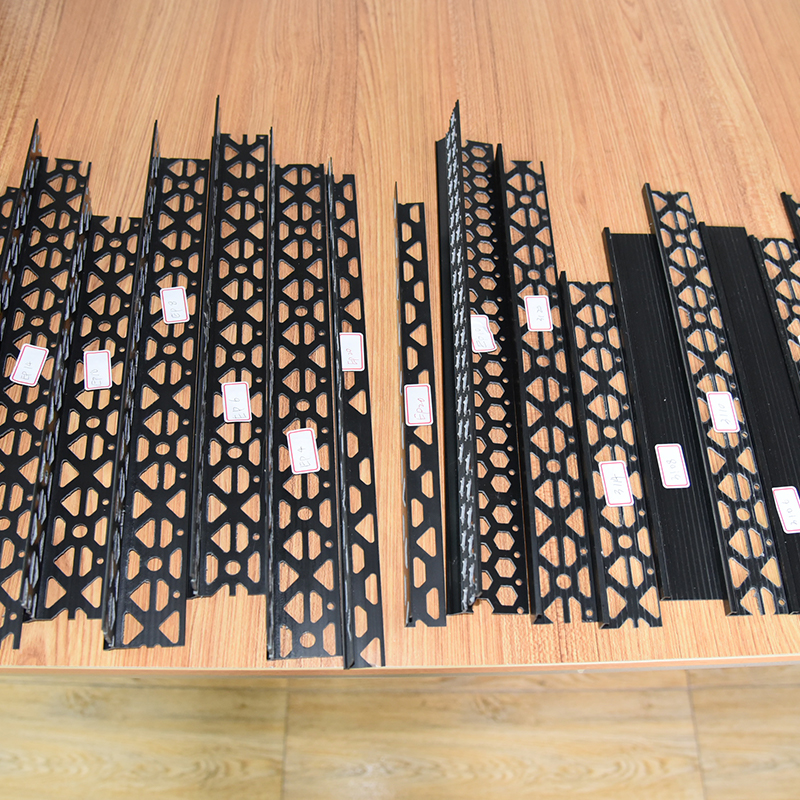
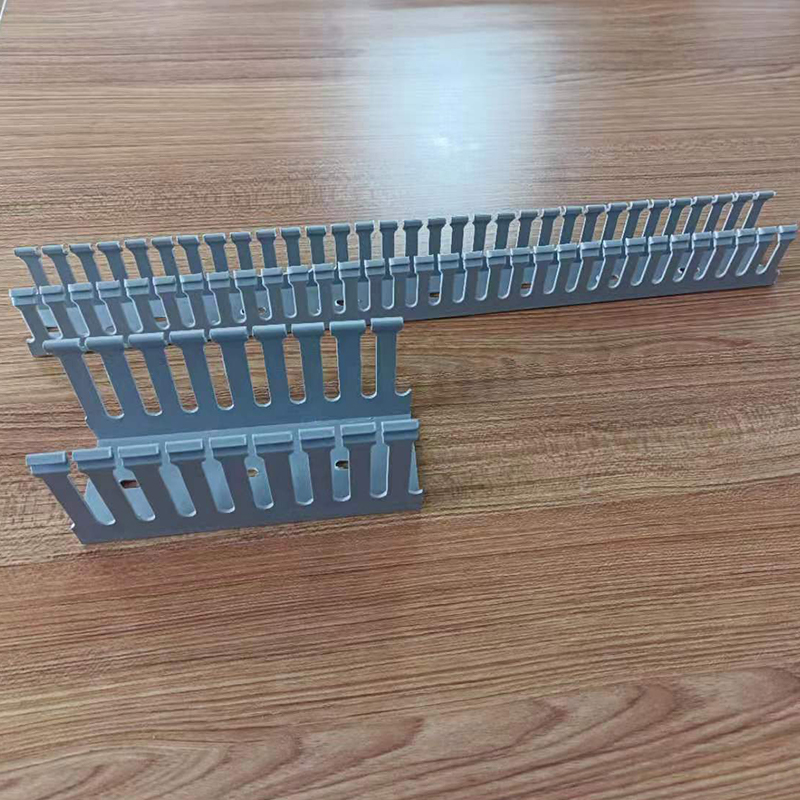
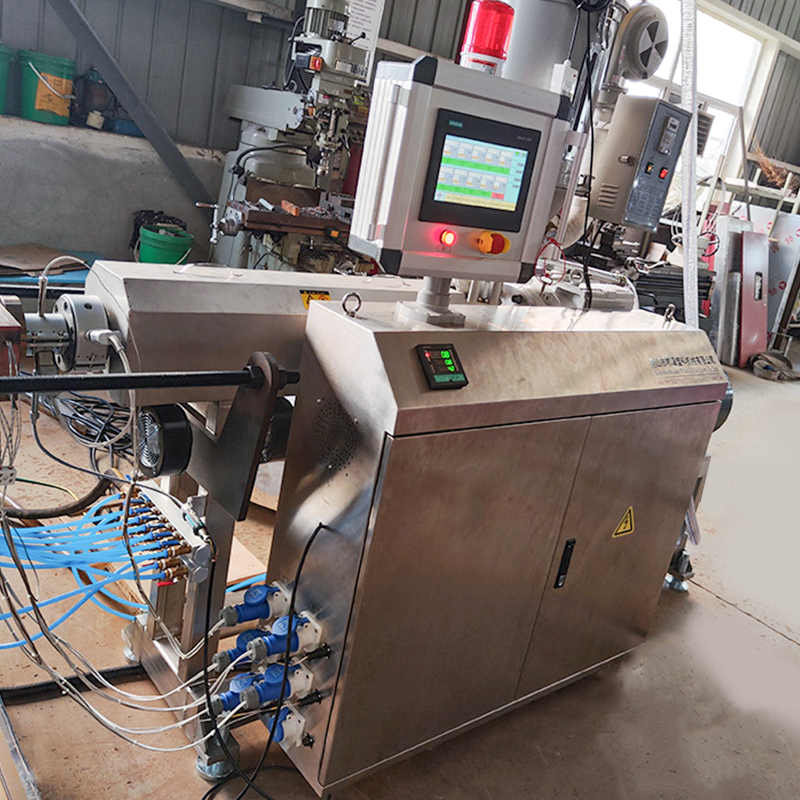
Extrusion molding is a continuous manufacturing process in which raw plastic or composite material is melted and forced through a shaped die to produce a profile of consistent cross-section. The result is a long, uniform product—such as pipes, sheets, or siding panels—cut to any required length. Unlike injection molding, which produces individual parts in a mold cavity, extrusion is ideal for high-volume, continuous-length products. A typical Siding Board Extrusion Line can produce hundreds of meters of finished panel per hour, making it one of the most cost-efficient processes in the plastics industry.
Understanding the process begins with knowing each major piece of equipment in the line and what it contributes:
Plastic resin—commonly PVC, HDPE, PP, or wood-plastic composite (WPC)—is dried if necessary to remove moisture. Moisture content above 0.1% in hygroscopic materials can cause surface defects and bubbles in the final product. Additives such as stabilizers, colorants, lubricants, and impact modifiers are compounded into the base resin at this stage.
Material is gravity-fed or force-fed from the hopper into the extruder barrel. Consistent feeding rate is critical: uneven feeding leads to fluctuating melt pressure and dimensional variation. Volumetric or gravimetric feeders are used in precision applications.
As the screw rotates, three zones within the barrel progressively transform the resin:
Barrel temperatures typically range from 150°C to 220°C depending on the material. A single-screw extruder with an L/D ratio (length-to-diameter) of 25:1 to 33:1 is standard for most siding and board profiles.
The homogenized melt is forced through the die at pressures typically between 100 and 350 bar. The die geometry determines the final profile shape—flat sheet, hollow chamber panel, tongue-and-groove siding, or complex co-extruded multi-layer structures. Die design is the most technically demanding aspect of the process; incorrect flow channels cause warping, uneven wall thickness, or surface defects.
Immediately after leaving the die, the hot extrudate enters a calibration sleeve (for profiles) or calibration table (for sheets), which holds the profile to precise dimensions while a water-cooling system solidifies it. Cooling water temperature is typically maintained between 15°C and 25°C. Insufficient cooling causes shrinkage and distortion; excessive cooling can create internal stresses.
A caterpillar or belt haul-off unit grips the cooled profile and pulls it forward at a speed synchronized with extrusion rate. Line speeds for siding board extrusion typically range from 1 to 6 meters per minute, depending on profile complexity and material.
A planetary saw, guillotine cutter, or disc saw cuts the continuous profile to the specified length. Modern systems use encoder-based measurement to achieve cutting tolerances of ±1 mm or better.
Finished boards or panels are stacked, inspected for dimensional accuracy, surface quality, and color consistency, then packaged for shipment.
Controlling these variables directly determines product quality:
| Parameter | Typical Range | Effect if Out of Range |
| Barrel Temperature | 150°C – 220°C | Degradation (too high) or poor fusion (too low) |
| Screw Speed (RPM) | 10 – 60 RPM | Melt overheating or under-plasticization |
| Die Pressure | 100 – 350 bar | Surface defects, uneven wall thickness |
| Cooling Water Temp | 15°C – 25°C | Warping, residual stress, or shrinkage |
| Haul-off Speed | 1 – 6 m/min | Dimension variation, surface drag marks |
The choice of extruder type significantly affects output quality and material compatibility:
For siding board production, conical counter-rotating twin-screw extruders are the industry standard due to their excellent PVC processing capability and output stability.
Siding board extrusion involves additional technical requirements compared to simple pipe or sheet extrusion. Panels must meet strict standards for flatness, UV resistance, impact strength, and consistent color throughout the product thickness (or via a co-extruded cap layer). Key application-specific factors include:
Even well-designed lines encounter problems. Here are the most frequent defects and root causes:
| Defect | Likely Cause | Corrective Action |
| Surface roughness / sharkskin | Melt fracture at high shear rate | Lower screw speed, raise die temperature |
| Warping / bowing | Uneven cooling or asymmetric die flow | Balance cooling, adjust die land |
| Bubbles / voids | Moisture in resin or entrapped air | Pre-dry material, check vent zone |
| Dimensional variation | Inconsistent haul-off speed or melt pressure | Stabilize screw speed, check haul-off tension |
| Color streaks | Poor mixing of colorant or degraded resin | Purge barrel, check masterbatch dispersion |
PVC (polyvinyl chloride) and WPC (wood-plastic composite) are the most widely used. PVC offers excellent weather resistance and low maintenance; WPC provides a more natural appearance and added rigidity.
Die changeover and calibration setup typically takes 2 to 6 hours depending on profile complexity and the operator's experience. Full production stability may require an additional 30–60 minutes of fine-tuning.
A properly maintained steel die can last 5 to 10 years in continuous production. Dies processing abrasive materials like WPC wear faster and may require hard-chrome or tungsten-carbide coating.
Yes. Colorants or masterbatches are compounded directly into the resin before extrusion, or a pre-colored cap layer is co-extruded, eliminating the need for post-process painting.
Extrusion produces continuous-length profiles with a constant cross-section. Injection molding fills a closed mold to make discrete, complex three-dimensional parts. Extrusion is better suited for boards, pipes, and sheets; injection molding is used for fittings, housings, and complex geometries.
Modern lines use inline measurement systems—laser gauges for width and thickness, and vision systems for surface defects—to monitor dimensions in real time and trigger automatic adjustments without stopping production.
Copyright © Kunshan Bonzer Plastics Machinery Co., Ltd. All Rights Reserved. Custom Plastic Machinery Suppliers




 English
 中文简体
中文简体