
 English
 中文简体
中文简体
Home / News / Industry News / How can the ceiling panel extrusion line be adjusted for different panel widths?
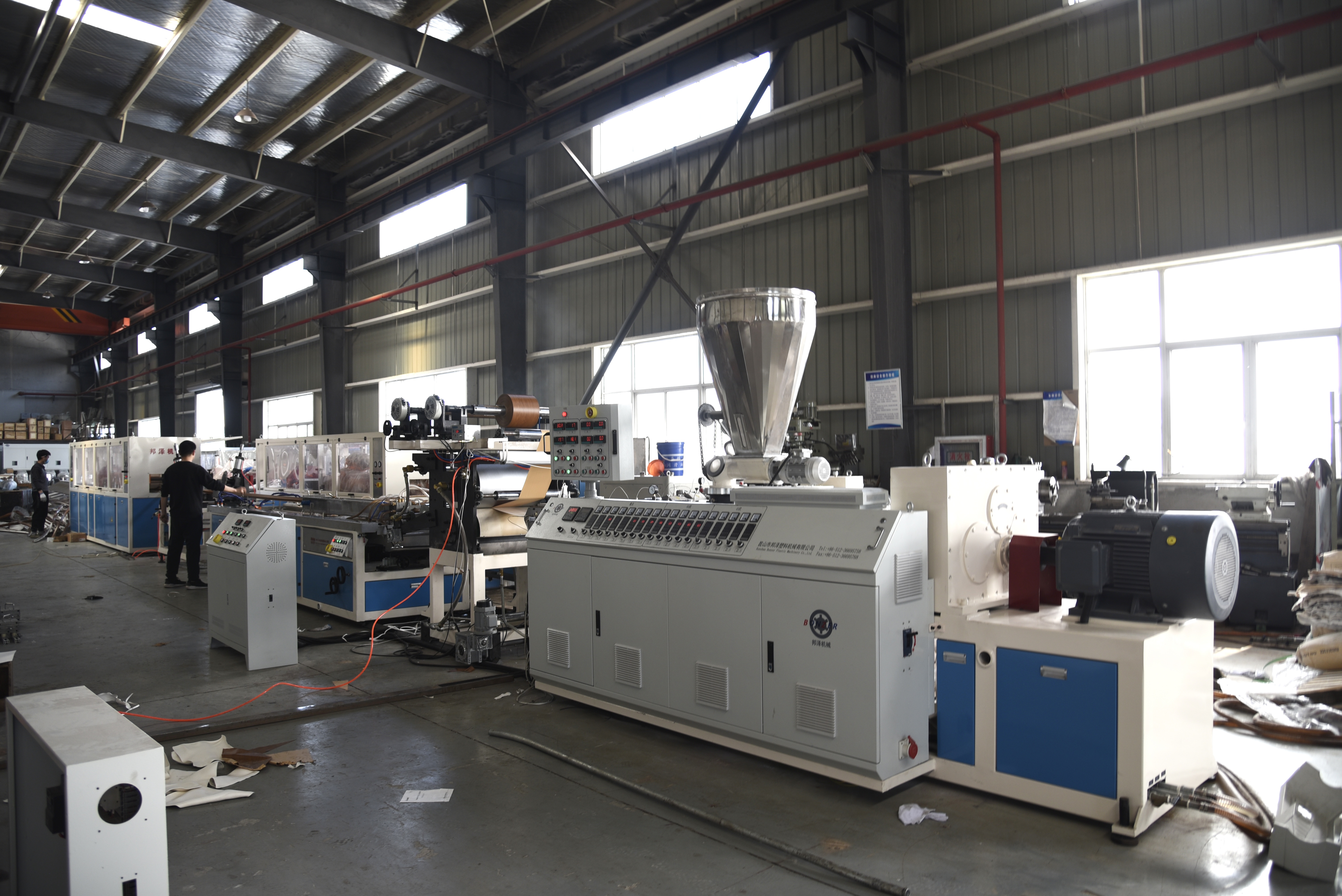
The ceiling panel extrusion line is an essential piece of equipment in the production of ceiling panels, offering consistent quality and efficiency in large-scale manufacturing. One of the most critical factors in optimizing production is the ability to adjust the line for different panel widths. Panel width customization is important because it allows manufacturers to meet diverse market demands, accommodate architectural design specifications, and maintain production efficiency.
The ceiling panel extrusion line is a complex system designed to convert raw materials into finished ceiling panels through a continuous extrusion process. This equipment typically includes the following components:
Each component plays a critical role in ensuring that the panel width can be modified accurately while maintaining product quality. Adjustments to panel width are often achieved through coordinated changes in the die, calibration system, and puller settings.
Adjusting a ceiling panel extrusion line for different widths involves more than simply changing settings; it requires careful consideration of several factors:
The die head determines the shape and width of the extruded panel. Dies can be modified or replaced to accommodate different widths, depending on the production requirements. Precision in die adjustment is crucial to ensure uniform panel thickness and consistent edge quality.
The calibration table or sizing unit stabilizes the extruded panel as it cools. A flexible calibration system can be adjusted laterally or with replaceable guide rails to match the desired panel width. The adjustment must be precise to prevent panel warping or uneven edges.
The puller or haul-off system must be synchronized with the die and calibration adjustments. Improper puller speed can lead to dimensional inaccuracies or surface defects, especially when panel width is increased. Adjustments in puller speed and grip settings are essential to maintain consistent panel quality.
When producing wider panels, the extruder must supply sufficient material to avoid thin or weak sections. A careful balance between material flow and cooling rate is necessary to maintain panel integrity. The extrusion process must be recalibrated whenever width changes are implemented.
Wider panels require more time and controlled cooling to solidify evenly. The cooling system must be capable of adjusting airflow or water flow to ensure consistent temperature distribution across the panel width.
Adjusting a ceiling panel extrusion line for different panel widths is a multi-step process. While the specific procedure can vary depending on equipment type, the general steps include:
Planning and specification
Determine the required panel width and assess the compatibility with existing die and calibration units. Identify whether a die replacement or modification is needed.
Die adjustment or replacement
Modify or replace the die head according to the target width. Ensure that all die components are properly aligned and secured.
Calibration system reconfiguration
Adjust lateral guides, rollers, or vacuum calibration channels to match the new panel width. Ensure uniform pressure and alignment to prevent warping.
Puller and speed adjustment
Synchronize puller speed with the new extrusion flow rate. Adjust grip settings or roller positions to accommodate the wider panel.
Material flow and temperature calibration
Verify that the extruder can supply sufficient material for the wider panel. Adjust temperature profiles to maintain consistent material viscosity.
Cooling system adaptation
Ensure that cooling mechanisms provide even temperature distribution across the entire panel width. Adjust water or air flow rates as necessary.
Trial runs and quality checks
Conduct test runs to verify dimensional accuracy and surface quality. Make iterative adjustments until panels meet the required specifications.
While adjusting the ceiling panel extrusion line for different widths is feasible, it presents several challenges. Addressing these challenges ensures optimal performance:
When panel width is increased, edges may experience uneven thickness or minor deformation.
Solution: Use precise die alignment, adjustable calibration guides, and synchronized puller speeds.
Wider panels may receive insufficient material at the edges, causing weak sections.
Solution: Adjust extruder output and monitor material flow across the width.
Large panels may cool unevenly, leading to warping or surface defects.
Solution: Implement adjustable cooling systems and ensure even airflow or water flow across the panel.
Changes in width can affect line speed and efficiency.
Solution: Optimize synchronization between the extruder, puller, and calibration units to maintain output.
Manufacturers of ceiling panel extrusion line equipment often implement design features to enhance width flexibility:
These innovations allow manufacturers to respond to diverse market demands efficiently and minimize downtime during transitions.
Ensuring panel quality during width adjustments is critical. Common quality control measures include:
Maintaining rigorous quality control ensures that even with varying panel widths, products meet industry standards and customer expectations.
For buyers seeking a ceiling panel extrusion line capable of producing panels of varying widths, several factors should be considered:
Adjustable panel widths provide multiple benefits:
Adjusting a ceiling panel extrusion line for different panel widths is a complex but manageable process. It involves careful planning, precise die and calibration adjustments, synchronized puller operation, material flow control, and proper cooling.
With proper procedures and attention to detail, the ceiling panel extrusion line can efficiently produce panels of varying sizes, providing manufacturers with the operational versatility needed in today’s competitive construction materials industry.
Copyright © Kunshan Bonzer Plastics Machinery Co., Ltd. All Rights Reserved. Custom Plastic Machinery Suppliers