
 English
 中文简体
中文简体
Home / News / Industry News / What are the key differences between single-screw and twin-screw edge banding strip extrusion lines?
The edge banding strip extrusion line plays a critical role in producing high-quality edge banding strips used in furniture, cabinetry, and panel applications. Selecting the right type of extrusion line is essential for manufacturers aiming to achieve consistent product quality, operational efficiency, and cost-effectiveness. Among the most significant decisions is choosing between a single-screw and twin-screw edge banding strip extrusion line.
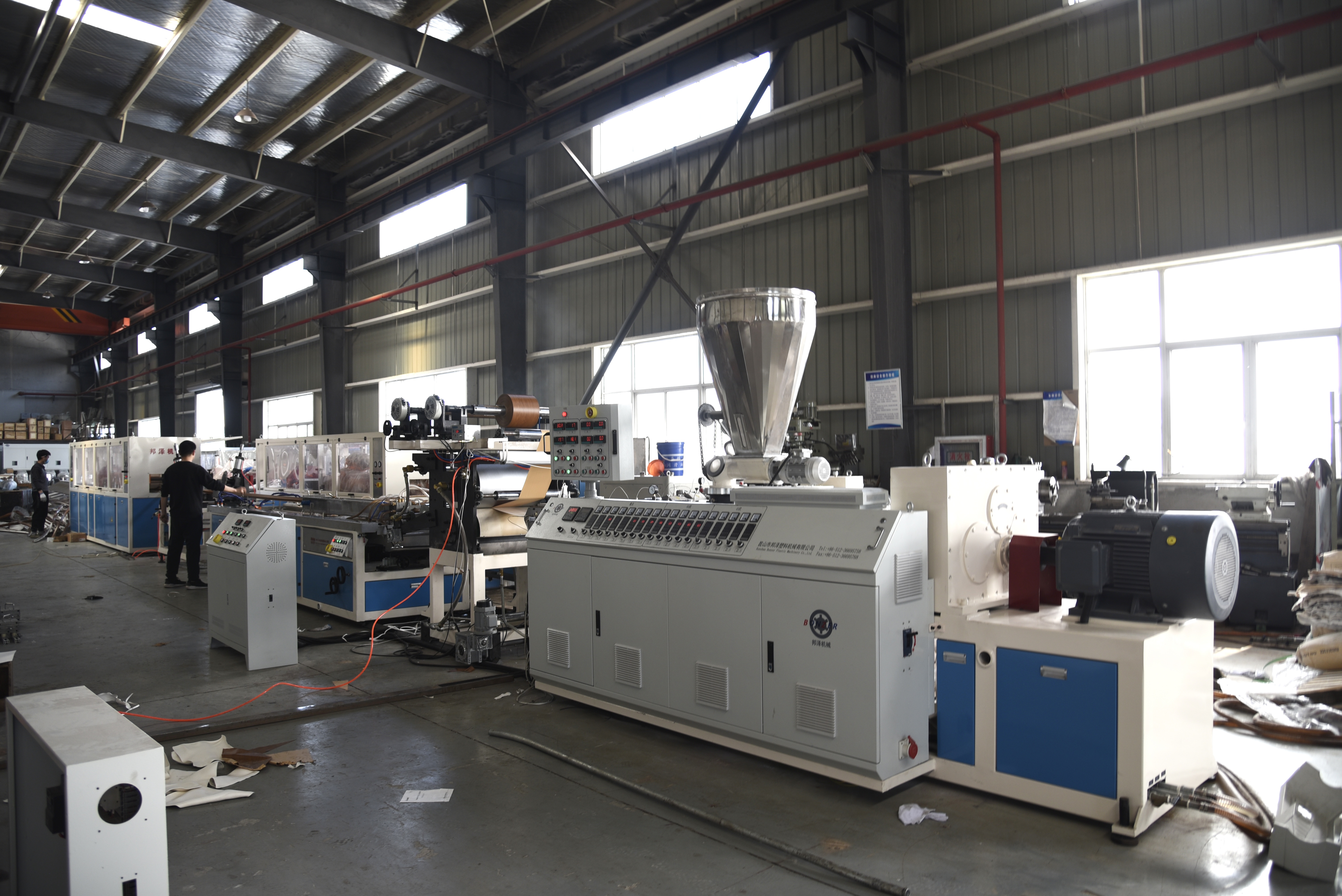
An edge banding strip extrusion line is a specialized production system designed to continuously process polymer materials, transforming them into precise edge banding strips for furniture panels and decorative applications. The line typically comprises a feeding system, extruder, die, cooling and calibration units, haul-off system, and cutting or winding mechanism. The performance of the extrusion line directly impacts the strip’s uniformity, flexibility, surface finish, and dimensional stability.
The primary distinction in extruder types lies in the screw configuration: single-screw versus twin-screw. Both types are widely used in the industry, but their design and operational characteristics result in different performance profiles. Understanding these differences is vital for manufacturers aiming to optimize production efficiency, material utilization, and end-product quality.
A single-screw edge banding strip extrusion line utilizes a single rotating screw inside a stationary barrel. The screw conveys, melts, and pressurizes the polymer material before forcing it through a die to form the edge banding strip. The simplicity of the design makes it easier to operate, maintain, and integrate with downstream equipment.
The single-screw system is most effective when processing thermoplastics with consistent material properties. The screw geometry is usually designed for gradual melting, mixing, and homogeneous flow, ensuring the polymer exits the die in a stable and uniform condition.
Simplicity and reliability are among the primary advantages of a single-screw extrusion line. The design has fewer moving parts, which reduces the likelihood of mechanical failure. Maintenance and cleaning procedures are generally straightforward, lowering downtime and service costs.
Cost-effectiveness is another key benefit. Single-screw systems typically require lower initial investment compared to twin-screw lines, making them suitable for manufacturers with budget constraints or smaller production volumes.
Additionally, single-screw extrusion lines are capable of producing edge banding strips with consistent dimensions and surface quality, particularly when handling standard polymers. The process efficiency is sufficient for most small- to medium-scale production needs.
Despite its advantages, a single-screw extrusion line has some limitations. Limited mixing capability restricts the ability to process materials that require intensive blending of additives, colorants, or recycled content. The system may also struggle with polymers that have high viscosity or inconsistent melt behavior, which can result in uneven extrusion or surface defects.
Single-screw lines also provide less flexibility in processing different polymers simultaneously. Changes in material often require adjustment of temperature profiles or screw replacement, which can slow down production in facilities that handle multiple polymer types.
The twin-screw edge banding strip extrusion line employs two intermeshing screws within a single barrel. These screws rotate in either the same or opposite direction, depending on the design, and provide enhanced conveying, melting, and mixing action compared to single-screw systems.
Twin-screw extruders can be configured as co-rotating or counter-rotating, with co-rotating designs being more common in polymer processing. The intermeshing screws create a self-cleaning effect and provide more efficient melting and homogenization, allowing for precise control over the polymer melt.
The twin-screw configuration offers superior mixing and compounding capabilities. This makes it ideal for manufacturers who require edge banding strips with consistent color, mechanical properties, or the inclusion of additives such as stabilizers, fillers, or recycled polymers.
Versatility and flexibility are significant advantages. Twin-screw extrusion lines can process a wide range of polymer types, including challenging materials that single-screw lines may not handle effectively. The system allows for continuous adjustment of screw elements, enabling manufacturers to optimize processing conditions for different materials or product specifications without extensive downtime.
Another advantage is enhanced process control. Twin-screw extruders often incorporate multiple monitoring points for temperature, pressure, and melt flow, allowing operators to maintain consistent quality and reduce scrap rates.
While twin-screw systems provide advanced capabilities, they are generally more complex and expensive than single-screw lines. The additional mechanical components and intricate design increase initial investment, maintenance requirements, and operational complexity.
Twin-screw lines may also consume more energy due to the higher torque required to rotate two screws and maintain consistent processing. For smaller manufacturers with limited production volumes, the cost and complexity may outweigh the benefits.
To illustrate the differences more clearly, the following table summarizes key aspects of single-screw and twin-screw edge banding strip extrusion lines:
| Feature | Single-Screw Edge Banding Strip Extrusion Line | Twin-Screw Edge Banding Strip Extrusion Line |
|---|---|---|
| Design complexity | Simple, fewer moving parts | Complex, intermeshing screws |
| Material versatility | Moderate, suited for standard polymers | High, handles a wide range of polymers and blends |
| Mixing efficiency | Limited | Excellent, suitable for additives and colorants |
| Maintenance | Easier, lower cost | Higher complexity, requires skilled technicians |
| Operational cost | Lower | Higher due to energy and maintenance |
| Production flexibility | Moderate, slower material changes | High, adjustable screw elements allow rapid adaptation |
| Initial investment | Lower | Higher |
| Quality control | Good, suitable for standard specifications | Excellent, consistent quality for complex polymers |
This comparison highlights that the choice between single-screw and twin-screw systems depends heavily on production needs, material requirements, and budget constraints.
When deciding between a single-screw and twin-screw edge banding strip extrusion line, several factors must be evaluated:
1. Material requirements: Consider the types of polymers, additives, or recycled content that will be used. Twin-screw systems are generally better for complex formulations.
2. Production scale: Single-screw lines are ideal for small to medium volumes, whereas twin-screw lines are better suited for high-volume, high-quality production.
3. Flexibility: If multiple strip sizes, colors, or polymer types will be processed, a twin-screw system provides greater adaptability.
4. Operational expertise: Twin-screw extrusion lines require more skilled operators and routine maintenance, while single-screw lines are simpler to manage.
5. Cost considerations: Evaluate the trade-off between initial investment, operational expenses, and expected production benefits. While twin-screw lines are more expensive, the increased versatility and consistent quality may justify the cost in large-scale operations.
6. Product quality requirements: If the final edge banding strips demand precise thickness, uniform color, and high surface quality, twin-screw systems may provide the necessary control and consistency.
The demand for edge banding strip extrusion lines continues to grow due to expanding furniture production and the trend toward automated, high-quality panel processing. Manufacturers are increasingly prioritizing process efficiency, material versatility, and environmental compliance, which influences their choice of extrusion technology.
Single-screw systems remain popular in regions where cost efficiency and simplicity are primary drivers, particularly for standard edge banding strips. Twin-screw systems, on the other hand, are increasingly adopted in markets requiring advanced compounding, recycled polymer integration, or specialty additives for improved surface performance and durability.
Automation and digital monitoring are also shaping modern extrusion lines. Advanced control systems allow for precise adjustment of temperature, pressure, and screw speed, enhancing consistency and reducing material waste. Both single-screw and twin-screw lines are integrating these technologies, though twin-screw systems benefit more due to their complexity and sensitivity to processing parameters.
Choosing between a single-screw and twin-screw edge banding strip extrusion line is a strategic decision that impacts production efficiency, product quality, and operational costs. Single-screw systems offer simplicity, reliability, and lower initial investment, making them suitable for standard polymers and smaller production scales. Twin-screw systems provide superior mixing, material versatility, and process control, supporting complex formulations and high-quality output for large-scale operations.
By carefully evaluating material requirements, production volume, flexibility needs, and cost considerations, manufacturers can select the extrusion line that aligns with their operational objectives. The right choice ensures consistent quality, reduced waste, and optimized performance in producing edge banding strips for furniture, cabinetry, and other panel applications.
In summary, understanding the distinctions between single-screw and twin-screw edge banding strip extrusion lines is essential for manufacturers seeking a balance between efficiency, versatility, and product quality in a competitive market.
Copyright © Kunshan Bonzer Plastics Machinery Co., Ltd. All Rights Reserved. Custom Plastic Machinery Suppliers