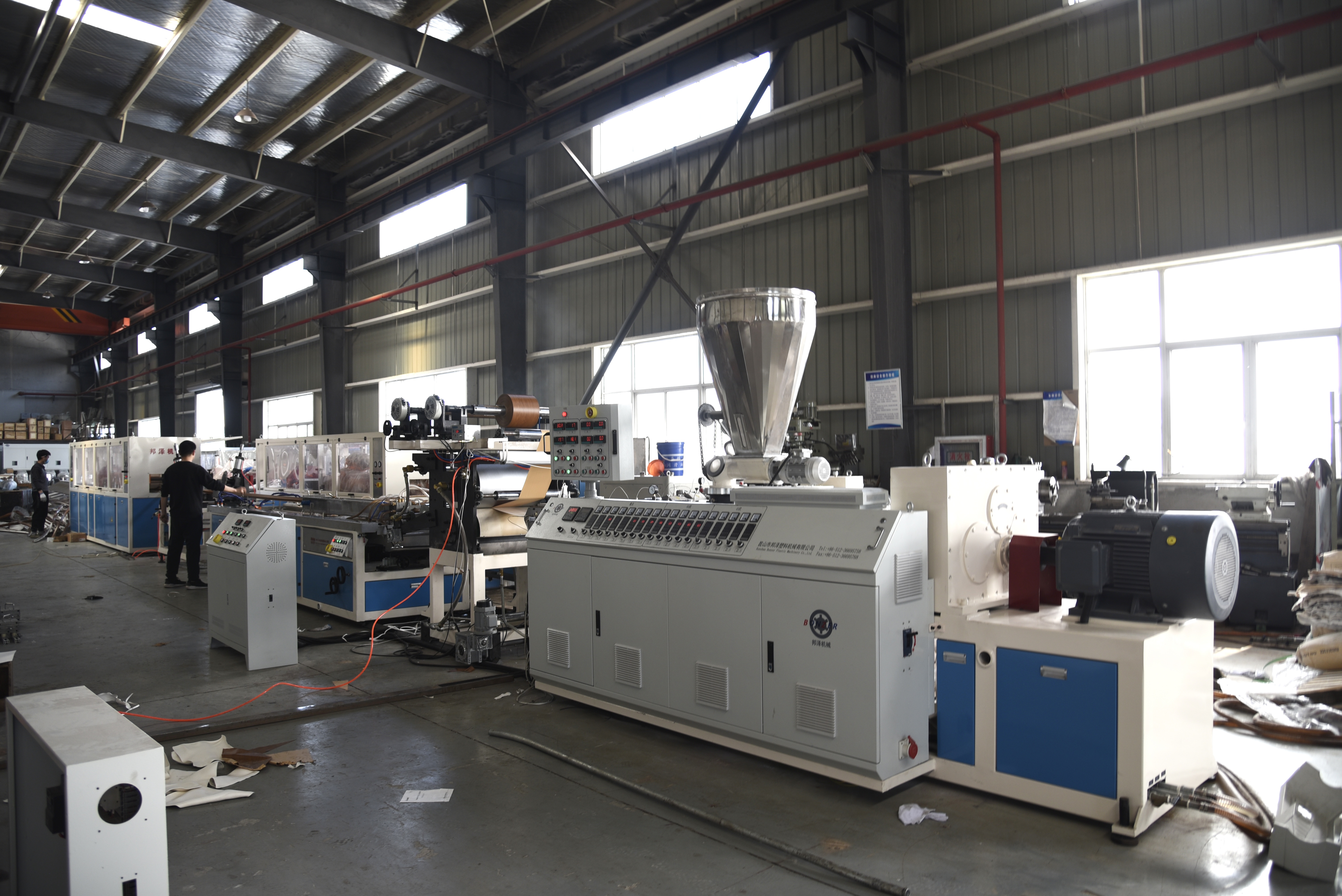
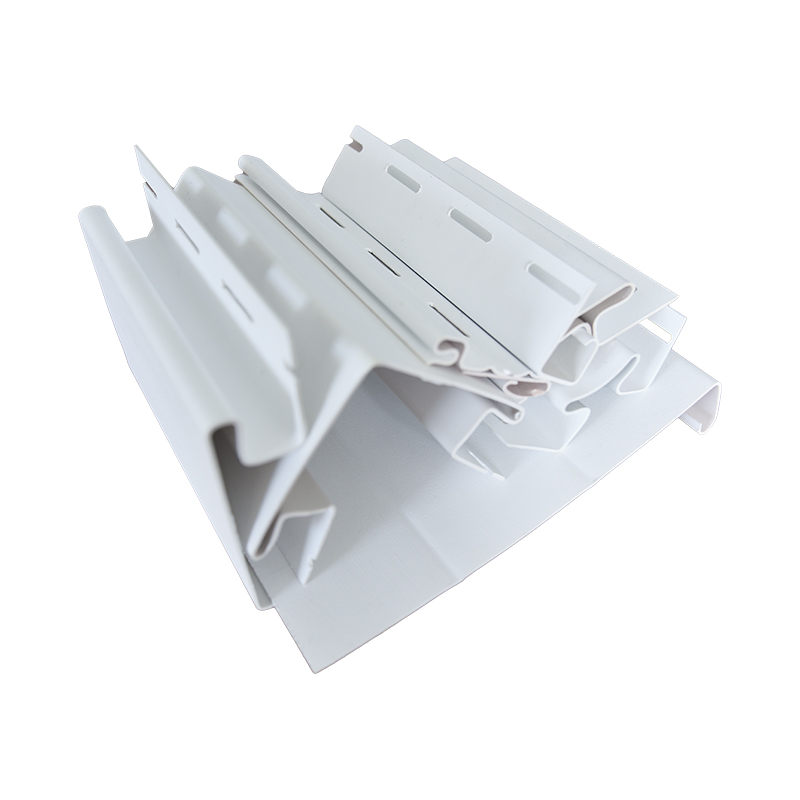
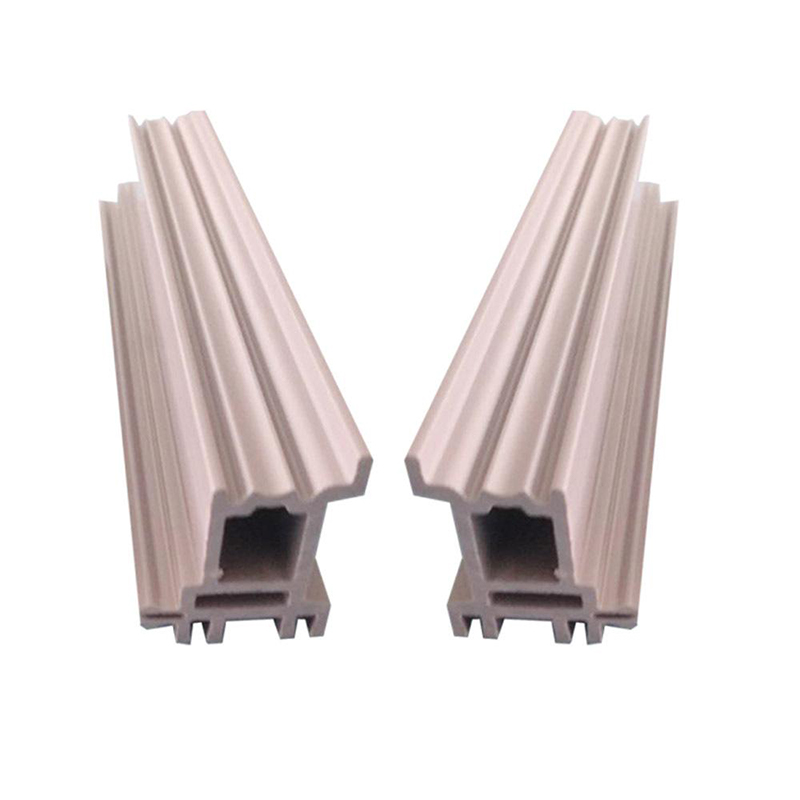
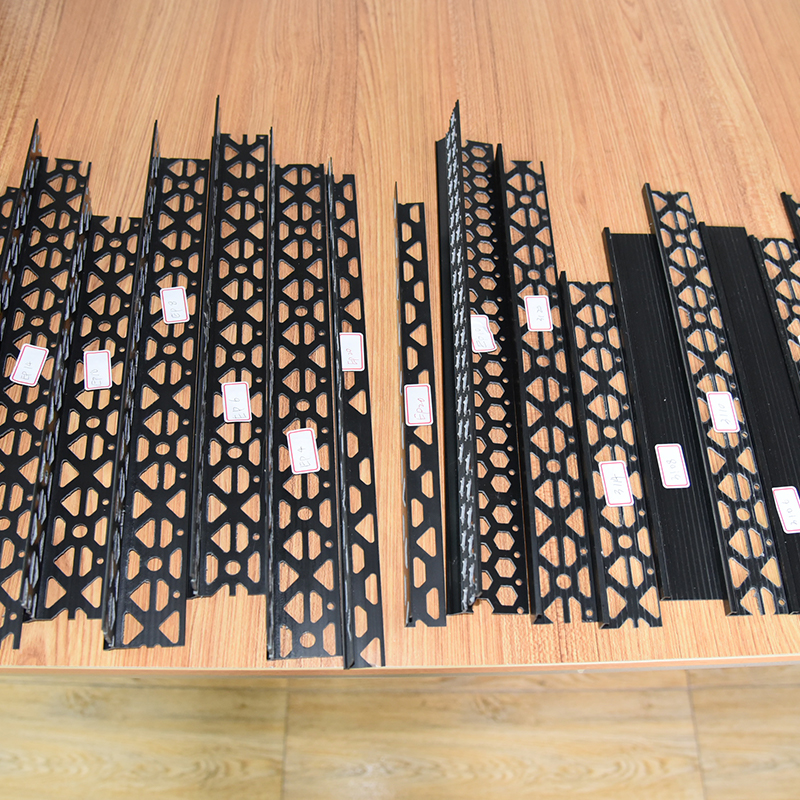
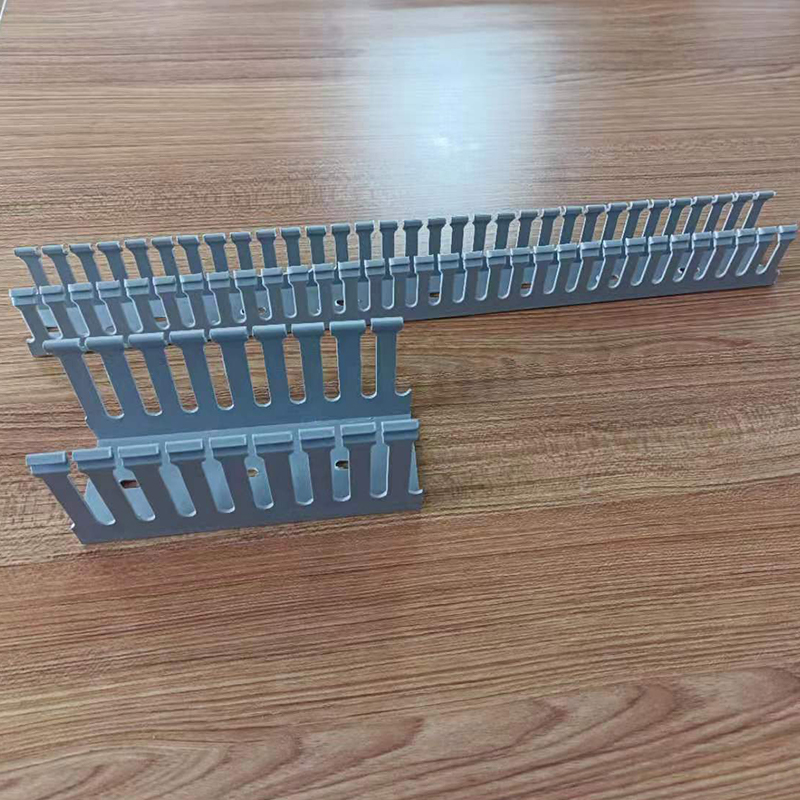
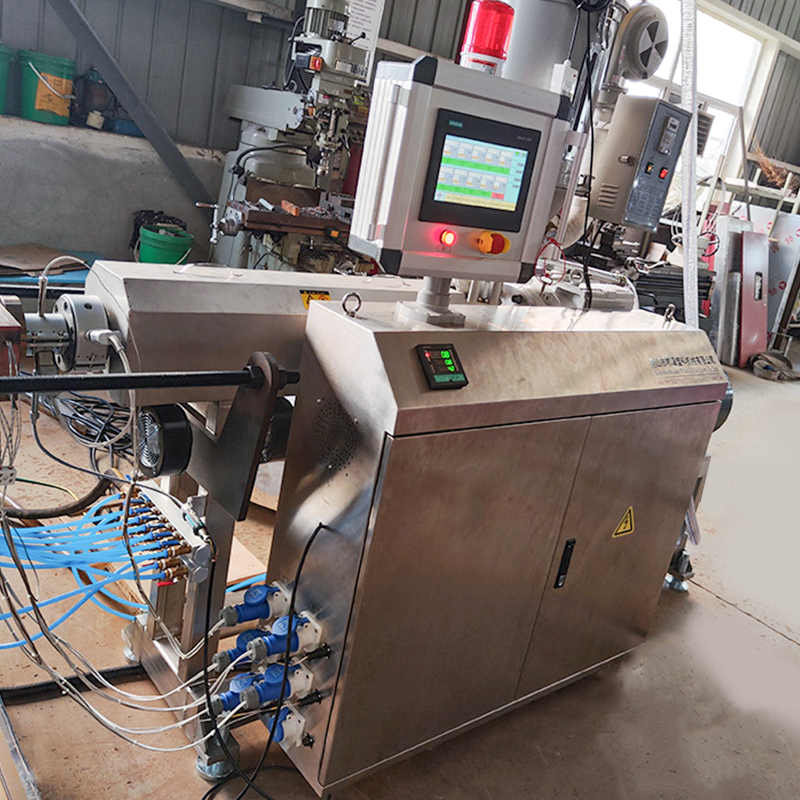
An extruder is the machine; extrusion is the process. This is the most direct answer. An extruder is a piece of manufacturing equipment that melts and pushes material through a shaped die. Extrusion refers to the entire process of forming a continuous profile by forcing molten material through that die. Understanding this distinction is essential when selecting equipment or evaluating manufacturing capabilities — especially in industries like plastic profile production, where precision matters.
In simple terms: you use an extruder to perform extrusion. One is the tool, the other is the action and workflow. This is comparable to saying a press performs pressing, or a mold performs molding.
An extruder is a mechanical device designed to continuously shape materials — most commonly thermoplastics — by melting them and pushing them through a die of a specific cross-sectional shape. The result is a long, uniform profile that can be cut to any required length.
Extruders are categorized by screw type — single-screw extruders are used for simple profiles, while twin-screw extruders (counter-rotating or co-rotating) are preferred for PVC compounds and more complex formulations due to their superior mixing and heat distribution.
| Extruder Type | Best For | Typical Output |
| Single-Screw Extruder | PE, PP, PS profiles | 50–300 kg/h |
| Twin-Screw Extruder | PVC, compounding | 100–600 kg/h |
| Conical Twin-Screw Extruder | Rigid PVC pipes & profiles | 80–400 kg/h |
Extrusion is a continuous manufacturing process in which raw thermoplastic material is melted, homogenized, and forced through a shaped die to produce a profile with a consistent cross-section. The process is highly efficient and can run 24 hours a day with minimal waste.
The entire downstream system — calibration table, cooling tanks, haul-off, and cutter — is an integral part of the extrusion line, working in coordination with the extruder to ensure dimensional accuracy and surface quality.
| Aspect | Extruder | Extrusion |
| Definition | The machine/equipment | The process/method |
| Role | Melts and pushes material | Full workflow from raw material to finished profile |
| Scope | One component of the line | Entire production system |
| Examples | Twin-screw extruder, single-screw extruder | Pipe extrusion, profile extrusion, sheet extrusion |
| Key Parameter | Screw diameter, L/D ratio, motor power | Output rate, cooling length, line speed |
The Artificial Marble Profile Extruder is a specialized extruder designed to produce decorative profiles that replicate the appearance of natural marble — typically used in wall panels, ceiling strips, window surrounds, and siding applications. These machines combine the core mechanics of plastic extrusion with co-extrusion or lamination technology to achieve a realistic stone or marble surface effect.
In this context, the extrusion process involves extruding a rigid substrate (usually PVC or ASA compound) while simultaneously applying or laminating a decorative film or surface layer. The result is a lightweight, durable profile with high-definition marble or stone textures, dimensional stability, and weather resistance.
A representative example is a stonelike laminated soffit panel extrusion line, which produces exterior soffit and siding panels with a stone-like laminated surface through continuous extrusion and in-line lamination — achieving an authentic decorative finish at industrial production speeds.
When sourcing equipment or evaluating production capacity, confusing the extruder with the extrusion line leads to incomplete decisions. Buying an extruder alone does not give you a functional production line. You need the full extrusion system: extruder + die + calibration + cooling + haul-off + cutter.
For artificial marble profile production specifically, the extrusion line must be engineered as a complete system. The extruder parameters must be matched to the die geometry and downstream cooling capacity. A mismatch — for example, an oversized motor paired with insufficient calibration length — results in poor surface quality, warping, or dimensional deviation exceeding acceptable tolerances.
When requesting a quotation or technical proposal, always specify:
Not exactly. An extruder is the core component that melts and pushes material. An extrusion machine (or extrusion line) refers to the complete system including the extruder plus all downstream equipment.
Primarily rigid PVC, ASA, and ASA/PVC blends. These materials offer the hardness, weather resistance, and surface compatibility needed for decorative marble-effect profiles.
Line speeds generally range from 1 to 5 meters per minute depending on profile wall thickness and cooling efficiency.
Yes. The extruder itself can remain the same; changing the die head allows production of different profile cross-sections. However, calibration tooling and cooling fixtures must also be changed accordingly.
Co-extrusion means two materials are extruded simultaneously through a combined die — for example, a structural PVC core with an ASA cap layer that provides UV resistance and color stability on the visible surface.
For rigid PVC-based marble profiles, conical twin-screw extruders are strongly recommended due to their superior plasticizing efficiency, lower melt temperature, and better output stability compared to single-screw designs.
Copyright © Kunshan Bonzer Plastics Machinery Co., Ltd. All Rights Reserved. Custom Plastic Machinery Suppliers




 English
 中文简体
中文简体