
 English
 中文简体
中文简体
Home / News / Industry News / What are the common screw designs used in wall panel extrusion line machines?
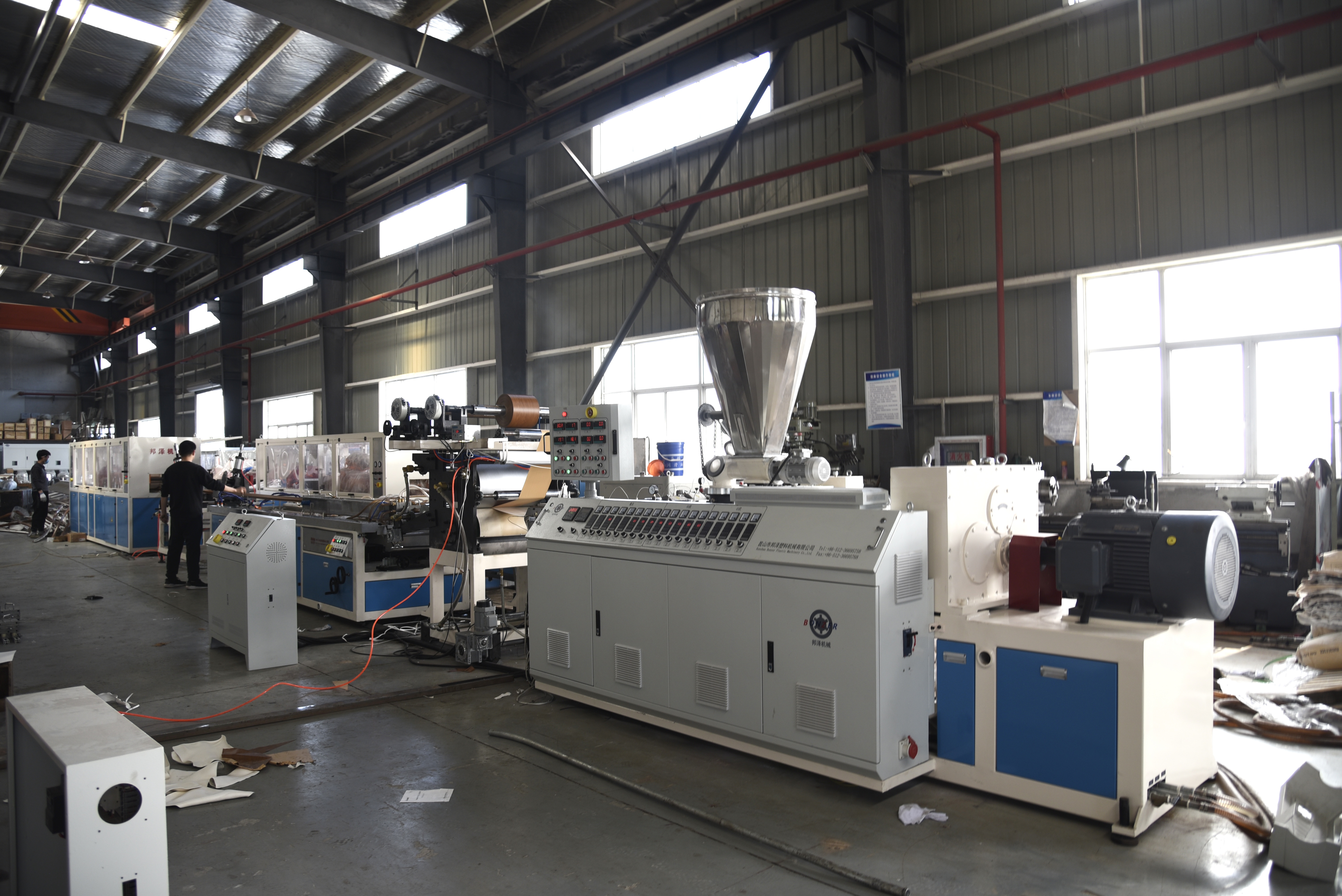
The wall panel extrusion line is a critical piece of equipment in modern construction and manufacturing industries, designed for the continuous production of wall panels from various polymer materials. Among its essential components, the screw system plays a pivotal role in determining product quality, consistency, and production efficiency.
The screw in a wall panel extrusion line is a rotating component within the extruder barrel that conveys, melts, homogenizes, and pressurizes polymer materials. The performance of the screw directly affects the efficiency of the extrusion process and the quality of the finished panels. Screw design is influenced by factors such as material type, panel thickness, line speed, and desired surface finish. Choosing the appropriate screw configuration is critical for minimizing production defects, maintaining dimensional stability, and optimizing energy usage.
A well-designed screw in a wall panel extrusion line should achieve uniform melting, consistent flow, and efficient degassing while preventing material degradation. Additionally, the screw must accommodate the specific characteristics of the polymer, whether it is rigid PVC, polypropylene, or other composite materials commonly used in wall panels.
Single-screw extruders are the most widely used type in wall panel extrusion line systems due to their simplicity and adaptability. They feature a single rotating screw within a stationary barrel, performing three main functions: conveying, melting, and mixing the polymer.
Key characteristics of single-screw designs:
Single-screw extruders in wall panel extrusion line applications often feature variations in screw geometry, such as varying compression ratios, to improve melting and homogenization efficiency. The compression ratio refers to the ratio of the channel depth in the feed zone to the channel depth in the metering zone. Proper selection of this ratio ensures that the material is melted uniformly and conveyed at a consistent rate.
Twin-screw extruders are increasingly common in advanced wall panel extrusion line systems, particularly when processing composite materials or formulations that require precise mixing. Twin screws can be co-rotating or counter-rotating, with intermeshing profiles designed to improve material processing.
Advantages of twin-screw designs include:
Twin-screw extruders are particularly beneficial when producing wall panels that incorporate reinforcing fibers, foaming agents, or recycled materials, which require uniform dispersion to maintain structural integrity and surface finish.
Barrier screws are a specialized variant of single or twin screws designed to improve the separation of solid and melt phases within the extruder. In a wall panel extrusion line, barrier screws enhance the efficiency of melting, reduce energy consumption, and minimize degradation of heat-sensitive materials.
Key features of barrier screws:
Barrier screws are particularly suitable for wall panel extrusion line machines processing high-viscosity materials or composite blends, where precise melting is crucial for maintaining product quality.
Some screws in wall panel extrusion line machines are equipped with specialized mixing sections, such as Maddock or other internal mixing elements, to enhance material homogeneity. These designs are especially relevant when additives, pigments, or recycled polymers are incorporated into the wall panel formulation.
Benefits of Maddock and mixing elements include:
These elements are often integrated into the metering or compression zones of the screw to achieve consistent material properties before the polymer exits the die.
The performance of screws in a wall panel extrusion line also depends on the material and surface treatment of the screw itself. High-quality screws are typically made from alloy steels with wear-resistant coatings to withstand abrasion from fillers and other additives.
Common considerations include:
Proper selection of screw material and surface treatment contributes significantly to the overall efficiency and reliability of a wall panel extrusion line, reducing downtime and maintenance costs.
In advanced wall panel extrusion line machines, screws may be designed to accommodate multi-layer panel production. Multi-layer wall panels typically feature a core material and one or more surface layers, which require precise control of material flow and temperature.
Screw considerations for multi-layer extrusion include:
Screw configurations for multi-layer panels often combine twin-screw sections for mixing with specialized barrier or distributive elements to maintain consistent layer thickness and quality.
The choice of screw design in a wall panel extrusion line has a direct impact on product characteristics, including surface finish, dimensional stability, and mechanical strength. For example, improper screw selection can lead to defects such as voids, warping, or inconsistent panel thickness.
Key quality considerations include:
By selecting the appropriate screw design, manufacturers can produce wall panels that meet industry standards and customer specifications with minimal waste.
Regular maintenance of screws in a wall panel extrusion line is crucial to maintain performance and extend service life. Key maintenance practices include:
Common troubleshooting scenarios related to screw design include inconsistent output, poor surface finish, or excessive energy consumption. Understanding the relationship between screw geometry and these issues allows operators to implement targeted solutions.
| Screw Type | Primary Function | Advantages | Applications |
|---|---|---|---|
| Single Screw | Basic conveying and melting | Simple, cost-effective, easy maintenance | Standard polymers |
| Twin Screw | Mixing and homogenization | Excellent mixing, adaptable to composites | Multi-material panels, filled polymers |
| Barrier Screw | Controlled melting and separation | Uniform melt, reduced degradation | High-viscosity or sensitive materials |
| Maddock/Mixing Screw | Additive dispersion | Consistent color/texture, controlled shear | Panels with pigments or recycled content |
Screw design is a fundamental factor influencing the performance and output quality of a wall panel extrusion line. From single-screw simplicity to twin-screw versatility and specialized barrier or mixing elements, each design offers distinct advantages for different materials and production requirements.
Selecting the correct screw design not only enhances the performance of a wall panel extrusion line but also supports long-term operational reliability and product consistency, making it a critical decision in the design and operation of extrusion equipment.
Copyright © Kunshan Bonzer Plastics Machinery Co., Ltd. All Rights Reserved. Custom Plastic Machinery Suppliers