
 English
 中文简体
中文简体
Home / News / Industry News / How do you choose a ceiling profile extruder for high-volume production?
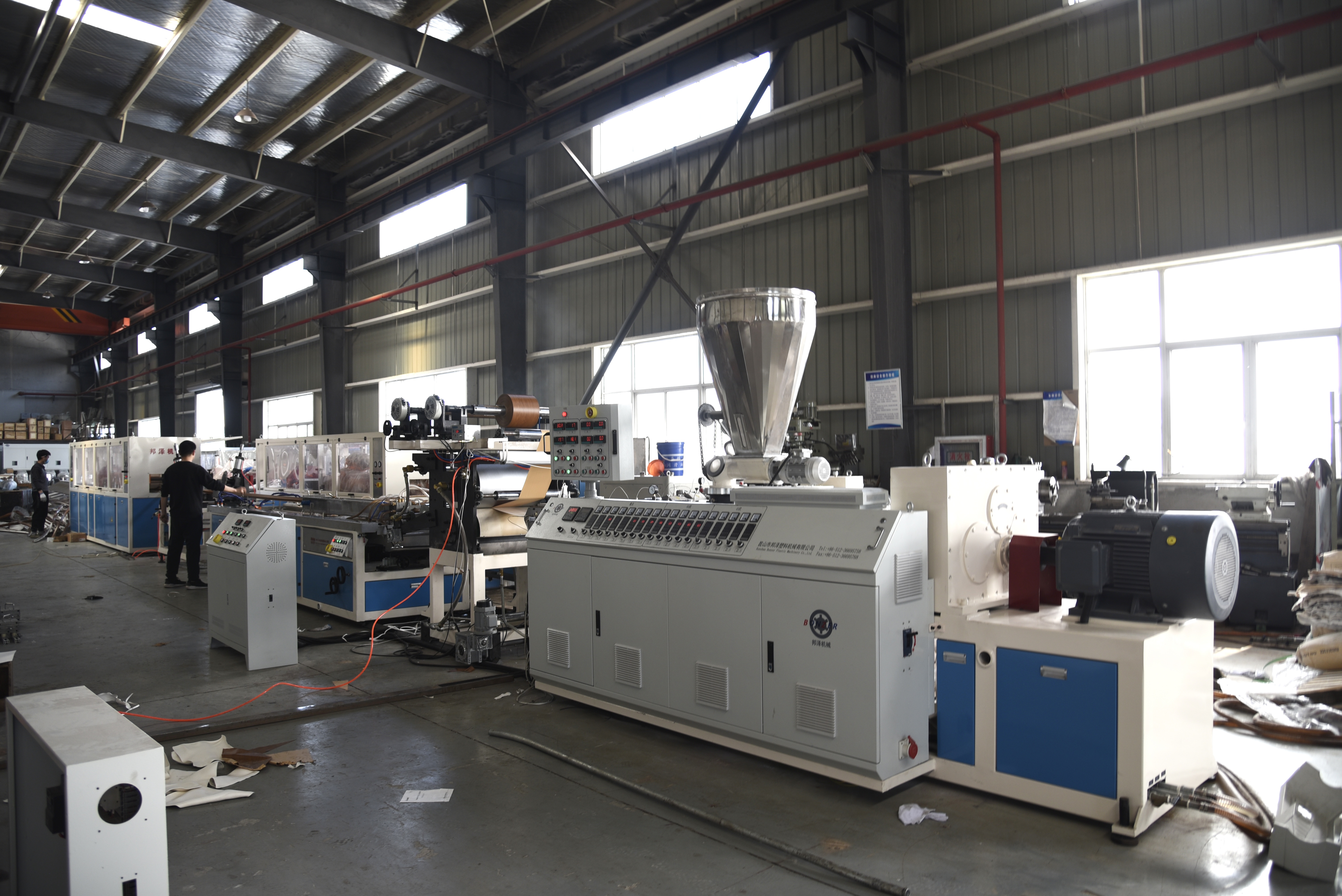
In the modern construction and interior decoration industry, Ceiling Profile Extruder machines have become essential equipment for producing high-quality ceiling profiles. Selecting the appropriate extruder for high-volume production requires a comprehensive understanding of the machine’s capabilities, material compatibility, production efficiency, and operational reliability.
A ceiling profile extruder consists of several key components that determine its performance and suitability for high-volume production. These components work together to process raw materials and form precise profiles.
Extruder barrel and screw
The screw design is critical in determining the material flow, melting efficiency, and output stability. High-volume production typically requires twin-screw extruders due to their superior mixing capabilities and consistent output. Screw length, compression ratio, and diameter influence the machine’s throughput and the quality of the extruded profile.
Heating and cooling system
Temperature control is vital to maintain material homogeneity and prevent defects such as warping or surface irregularities. Modern extruders incorporate multi-zone heating systems, allowing precise control over each section of the barrel. Similarly, cooling systems such as water baths, air cooling, or vacuum calibration units ensure dimensional stability.
Die assembly
The die design directly affects the profile shape, surface finish, and dimensional accuracy. For high-volume production, dies must be designed for continuous operation, with easy maintenance and the ability to handle extended production cycles without frequent replacement.
Drive system
A robust drive system ensures consistent torque and stable operation, which is critical for high-speed extrusion. Variable frequency drives and precise control units allow manufacturers to adjust speed according to material characteristics and profile dimensions.
Material selection is a significant factor when choosing a ceiling profile extruder. Different polymers such as PVC, ABS, and composite materials exhibit unique melting behaviors, viscosity characteristics, and thermal sensitivities. Understanding these properties is essential to optimize production and prevent defects.
Table 1: Material processing characteristics for ceiling profile extruders
| Material Type | Processing Temperature | Viscosity Behavior | Common Challenges |
|---|---|---|---|
| PVC | 170–210°C | Medium | Warping, surface roughness |
| ABS | 200–240°C | Low-Medium | Shrinkage, stress cracking |
| Composite | 180–230°C | Variable | Fiber agglomeration, nozzle wear |
Selecting a ceiling profile extruder capable of handling these materials efficiently ensures high throughput while maintaining consistent quality.
High-volume ceiling profile production demands machines with optimized output capacity and energy efficiency. The extruder’s throughput rate is influenced by screw design, barrel length, and die geometry. Manufacturers should prioritize machines with the following features:
Properly balancing speed, torque, and temperature ensures that profiles are produced without compromising quality. Automation solutions such as online monitoring and feedback controls further enhance efficiency by adjusting operational parameters in real time.
Table 2: Key performance indicators for high-volume ceiling profile extruders
| Parameter | Recommended Value for High-Volume Production | Impact on Production |
|---|---|---|
| Output rate (kg/h) | 300–800 | Higher throughput without quality loss |
| Screw speed (rpm) | 40–120 | Optimal material flow and stability |
| Barrel temperature uniformity | ±2°C | Prevents warping and surface defects |
| Downtime for maintenance | <5% | Ensures continuous production |
Evaluating these indicators allows manufacturers to select the right machine for large-scale ceiling profile manufacturing.
The reliability of a ceiling profile extruder is a critical factor in high-volume production. Frequent breakdowns can disrupt schedules and increase operational costs. Key aspects include:
High operational reliability reduces waste and maintains product quality, which is essential when producing ceiling profiles in large quantities.
Consistent profile quality is vital for customer satisfaction and regulatory compliance. Key considerations include:
In-line inspection systems such as laser measuring devices and vision systems help maintain continuous quality monitoring, ensuring each profile meets specifications.
High-volume production often requires a ceiling profile extruder to be integrated into a complete production line, including:
Integration reduces manual labor, enhances productivity, and minimizes human error. Additionally, digital control systems enable operators to synchronize multiple processes, optimizing overall efficiency.
Energy efficiency and environmental impact are increasingly important in modern manufacturing. Factors to consider include:
Selecting a ceiling profile extruder that balances performance with sustainability supports long-term operational and economic goals.
Choosing the right ceiling profile extruder for high-volume production requires a comprehensive evaluation of machine specifications, material compatibility, production efficiency, maintenance requirements, quality control, and environmental considerations. By carefully assessing these factors, manufacturers can optimize throughput, ensure product consistency, and achieve cost-effective operations. Advanced features such as twin-screw systems, automated feeding, precise temperature control, and integrated monitoring further enhance performance and reliability.
Selecting an extruder that aligns with these criteria is critical for meeting the demands of large-scale ceiling profile manufacturing while maintaining high standards of quality and operational efficiency.
Q1: What materials can a ceiling profile extruder process for high-volume production?
A: A ceiling profile extruder can process PVC, ABS, composite materials, and other polymers suitable for profile manufacturing. The choice depends on the machine’s design, temperature capabilities, and screw configuration.
Q2: How important is screw design in selecting a ceiling profile extruder?
A: Screw design is crucial. Twin-screw extruders provide better mixing, consistent output, and are preferable for high-volume production compared to single-screw machines.
Q3: Can automation improve the performance of a ceiling profile extruder?
A: Yes. Automation systems, including feed control, temperature monitoring, and in-line inspection, help maintain consistent quality and reduce human error in large-scale production.
Q4: What maintenance practices are recommended for high-volume ceiling profile extruders?
A: Preventive maintenance, regular inspection of screws and dies, lubrication, and monitoring of wear components are essential to ensure reliability and minimize downtime.
Q5: How does a ceiling profile extruder affect product quality?
A: It influences dimensional accuracy, surface finish, and material homogeneity. Proper extrusion parameters, die design, and cooling systems are key to achieving consistent high-quality profiles.
Copyright © Kunshan Bonzer Plastics Machinery Co., Ltd. All Rights Reserved. Custom Plastic Machinery Suppliers